


Weather & Rain Radar Forecast
4.841.00 Reviews
App Specs
- Version
- 126.0
- Updated On
- License
- Free
- Downloads
- 1,000,000+
- Developer
- Deep Orbit
- Categories
- Weather
- Platform
- Android
Screenshots
 Analysis by AppCompare
Have you ever found yourself caught in an unexpected downpour, wishing you had a reliable weather app to warn you in advance? Well, let me introduce you to the Weather & Rain Radar Forecast app, your new best friend for all things weather-related. I've spent some time exploring its features, and here's my take on it.
First Impressions and User Interface
Upon launching the app, the first thing you'll notice is its sleek and modern design. The Weather & Rain Radar Forecast app boasts a clean interface that's both intuitive and easy on the eyes. Navigating through the different sections is a breeze, with everything neatly organized and accessible. It's clear the developers put a lot of thought into making this app user-friendly.
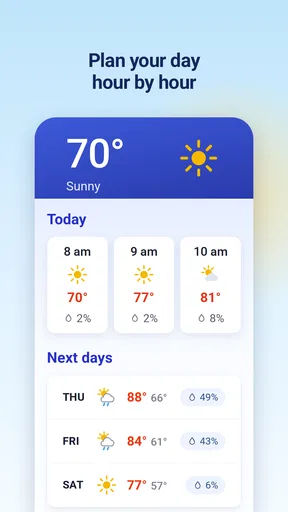
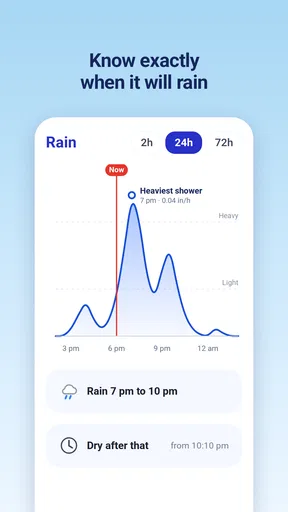
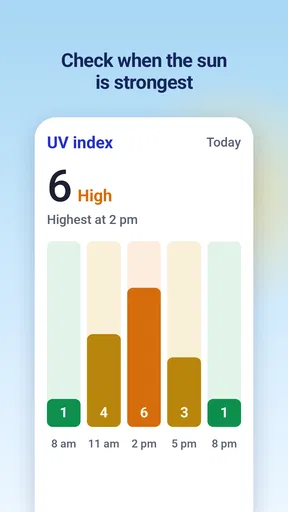
The home screen provides a quick glance at the current weather conditions, including temperature, humidity, wind speed, and of course, the chance of rain. The color-coded icons make it easy to interpret the data at a glance, which is a huge plus when you're in a hurry.
Features That Stand Out
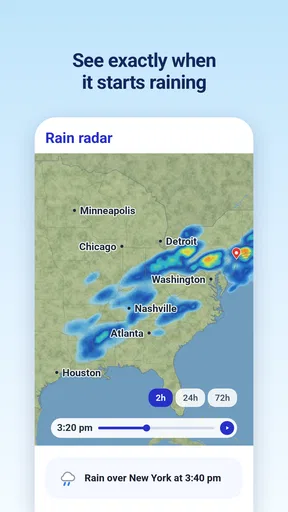
One of the standout features of this app is its highly accurate radar system. The radar offers real-time updates on weather patterns, allowing you to see storms approaching in vivid detail. It's almost like having your personal meteorologist in your pocket! The radar is interactive, so you can zoom in and out, and even track storms in different regions if you're planning a trip.
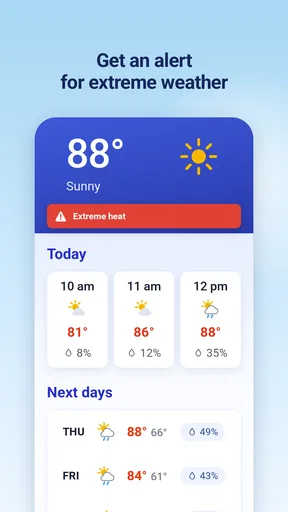
Another feature I absolutely love is the customizable alerts. You can set the app to notify you about significant weather changes, like sudden temperature drops or impending thunderstorms. This has saved me more than once when I was planning outdoor activities.
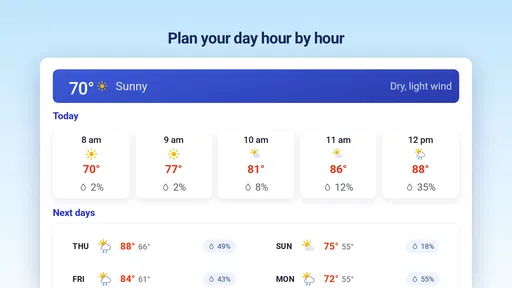
The app also offers a detailed hourly forecast, which is perfect for planning your day. Whether you're deciding what to wear or scheduling an outdoor event, having such precise information is incredibly helpful.
Exploring Additional Tools
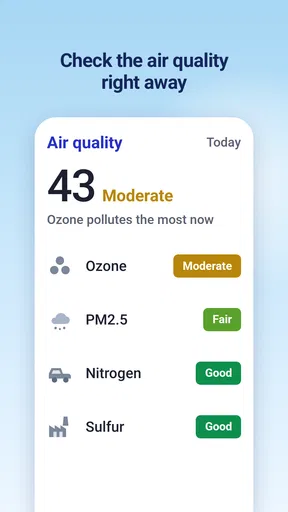
Beyond the basics, the app includes some nifty tools for weather enthusiasts. There's an option to view historical weather data, which can be fascinating if you're curious about past weather trends. You can also access air quality reports, which is becoming increasingly important in today's climate-conscious world.
Worth Reading Before You Choose

Baby Panda World Brings Quick Play to Modern Phones, but Its Game Library Feels Busy

ESPN’s Live Game View Makes Following Close Games Easier

QuizzLand Review: A Good Fit for Short Trivia Breaks, Not Every Player

Basketball Stars: Multiplayer Is Fast, but Can It Recover When Matches Go Wrong?

WEBTOON Turns Phone Updates Into a Better Reading Routine

Link to Windows Runs on Shared Habits, Not Social Feeds
For those who love sharing weather updates, there's a social feature that allows you to share current conditions with friends and family. It's a fun way to keep everyone informed, especially if you're experiencing extreme weather.
Performance and Reliability
In terms of performance, the app runs smoothly with minimal lag. I've tested it on both Android and iOS, and it performs consistently well on both platforms. The updates are frequent, ensuring that you always have the latest weather data at your fingertips.
The app's reliability is impressive. During my testing, the forecasts were spot-on, and the radar was incredibly accurate. It's clear that the developers have invested in quality data sources, which makes a world of difference in a weather app.
Network Dependence in Everyday Use
A live radar is most useful when its map can refresh, so I treat this app as a connected planning tool rather than something to rely on when a signal has already disappeared. Before leaving home, I check the location and radar while I have a stable connection; once outside, I use the result as context, not as a promise that every new cell or forecast change will load immediately.
That small routine matters when a storm is moving across the area. A map that looked clear earlier can become outdated, and a stalled animation may be mistaken for calm weather. If the screen stops changing, I refresh when the connection returns instead of assuming the conditions themselves have stopped changing. For urgent warnings, I would also keep local official alerts available rather than making any single app my only source.
On a commute, the practical question is often whether rain is likely to affect the next part of the trip, not whether the whole day will be sunny. I check the near-term radar before setting out, then use the forecast to decide whether to carry a rain layer or shift an outdoor errand. For a longer drive, I would check again at a safe stop; looking down at a moving map while driving is not worth the risk.
Choosing the Right Mobile Moment
The app is a natural fit for people who make plans outdoors and want more than a single general forecast: walkers, dog owners, gardeners, parents arranging school pickup, and anyone who cycles or commutes on foot. Its combination of radar, alerts, and a longer-range outlook gives those users different ways to think about timing. I find it particularly useful when a plan is flexible by an hour or two, because seeing rain approach can help me leave earlier or postpone a task.
For a realistic example, imagine I have laundry outside and need to collect a child later in the afternoon. I would first look at the broader forecast to understand the day, then inspect the radar nearer the time I need to leave. If rain seems likely, I can bring the laundry in and pack a jacket before the rush. That is a more useful workflow than repeatedly checking one temperature number, because the decision depends on both timing and the direction of changing conditions.
There is a trade-off on small screens. A radar map is more informative when I can see a broad area, while a detailed local view helps me focus on what is near home. I zoom out to understand the wider movement, then zoom back in before making a local choice. For a quick glance while walking, the concise home view is easier; for route planning, I prefer to stop and study the map rather than trying to interpret it on the move.
What the Forecast Can and Cannot Decide
A fourteen-day outlook is useful for spotting the general shape of a week, such as a stretch that may be wet or a day worth keeping flexible. I would not use a forecast that far ahead to decide exactly when to start a picnic or schedule a long outdoor event. The closer the decision, the more I would lean on the hourly view and current radar, then check again as the day approaches.
This distinction also helps set expectations for alerts. Notifications can bring a change to my attention, but I still need to decide whether it affects my plans and verify the current conditions before acting. If I am organizing something where weather creates a safety concern, I would not treat a phone notification as a substitute for official local guidance. The alerts are best understood as prompts to look, not as a guarantee that I can stop paying attention.
Compared with a basic weather app that emphasizes current conditions and a simple daily forecast, this one puts more weight on seeing precipitation and weather movement. That is an advantage for deciding whether to head out now or wait. A standard forecast can be quicker for someone who only wants the temperature, while a dedicated local warning service may be a better companion when the priority is emergency information. I would choose based on the decision I need to make, rather than expecting one app to cover every kind of weather information equally well.
When Connections Falter
Travel and outdoor use bring an obvious limitation: a live map depends on fresh information reaching the phone. In a weak-signal area, I would not assume the radar is current simply because it remains visible. I check when connectivity is good, note the forecast for the relevant time, and avoid treating an old image as a new observation. If the connection drops just as I need to make a decision, I look for another reliable source or use the latest information I already have with caution.
Battery and attention are part of the same practical calculation. Frequently reopening a map and watching it update can be less convenient than checking once before leaving and again when there is a reason to do so. I use alerts to reduce unnecessary checking, but I do not turn every possible notification into a reason to interrupt my day. A few relevant alerts are more helpful than a phone that keeps pulling me back to the weather screen.
For people mindful of mobile data, the sensible approach is to use the radar deliberately: load it when a forecast question matters, inspect the area, and close it when the decision is made. I would avoid leaving a live map open just for reassurance. The forecast itself is still valuable for broad planning, while repeated map refreshes are most worthwhile when rain timing could actually change what I do.
Who Will Get the Most From It
Deep Orbit’s weather app is free, has an Everyone age rating, and has attracted over one hundred thousand installs. Its average rating is 4.5 from around 900 ratings, though I would treat popularity as context rather than proof that every forecast will match every neighborhood. Version 72.0 is listed for devices running Android 7.0 or later. The app was released on March 18, 2026, so it is a relatively recent option for people comparing weather tools.
I would recommend it to someone who often asks, “Will rain interrupt this plan, and when?” The radar and alerts are more relevant to that person than to someone who only checks the temperature once each morning. A weather enthusiast may also appreciate being able to explore maps and look back at historical conditions, while an air-quality-conscious user may find the additional report useful alongside the forecast.
On the other hand, if I wanted only a minimal glance at today’s temperature, I might prefer the simplest built-in weather tool on my phone. If I needed a specialist source for severe-weather response, I would pair a consumer forecast app with the appropriate official service. And if I expect to spend time without dependable connectivity, I would plan around that limitation instead of assuming any live radar app can provide fresh updates in a dead zone.
Final Thoughts
All in all, the Weather & Rain Radar Forecast app is a must-have for anyone who wants to stay ahead of the weather. Its combination of accuracy, user-friendly design, and a plethora of useful features make it stand out in a crowded market. Whether you're a casual user or a weather aficionado, this app is sure to become an essential tool in your daily routine.
If you're looking for a reliable weather companion, give this app a try. Download it today and never get caught in the rain unprepared again!
Pros
- Accurate real-time weather updates.
- User-friendly interface with easy navigation.
- Detailed radar maps for tracking storms.
- Customizable alerts for severe weather.
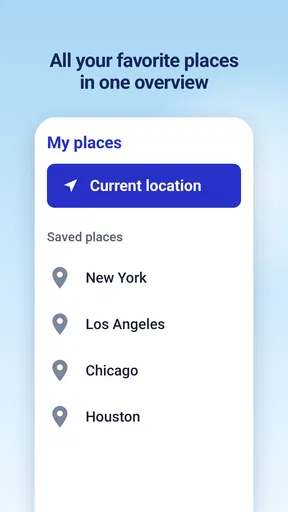
- Supports multiple locations for forecasts.
Cons
- Occasional ads can disrupt use.
- Premium features behind a paywall.
- Battery consumption can be high.
- Requires internet for most features.
- Limited offline functionality.
FAQs for Weather & Rain Radar Forecast
What features does Weather & Rain Radar Forecast offer?
Weather & Rain Radar Forecast provides real-time weather updates, detailed forecasts, and interactive radar maps. Users can receive personalized alerts for severe weather conditions, track storms in their region, and access daily, weekly, and hourly forecasts. The app also includes widgets for quick access to weather information.
How accurate is the weather data provided by the app?
The app sources its data from reliable meteorological services and utilizes advanced algorithms to ensure high accuracy. While no weather app can guarantee 100% precision due to the unpredictable nature of weather, Weather & Rain Radar Forecast is known for its reliable and timely updates, making it a trusted choice for users.
Is the app user-friendly for beginners?
Yes, Weather & Rain Radar Forecast is designed with a user-friendly interface that simplifies navigation. Beginners can easily access features with intuitive menus and clear instructions. The app also offers tutorials and guides to help users make the most of its functionalities without any technical hassle.
Does the app support multiple languages?
Yes, Weather & Rain Radar Forecast supports multiple languages, making it accessible to a global audience. Users can select their preferred language in the settings menu, ensuring that weather information and alerts are delivered in a language they understand.
Are there any subscription fees or in-app purchases?
The app is free to download and provides basic weather forecasting features without cost. However, for advanced features such as ad-free browsing, enhanced radar maps, and premium alerts, users may need to subscribe to a paid plan. Subscription details are available within the app for those interested in premium features.


